
Table of Contents
A blog rarely earns money because it exists. It earns when it helps a particular reader solve a problem and offers a useful next step. So THAT is the best way to monetise a blog.
If you’re asking, “What is the best way to monetise my blog?”, start with your audience, not a revenue promise. Beginners, part-time business owners, and people building retirement income can all earn online, but results depend on trust, useful content, skills, and steady effort.
The practical path starts with helpful posts, then adds income streams that match what readers already need.
Key Takeaways for Making Money From a Blog
- Affiliate marketing is often a sensible first income stream because you can recommend useful products without creating your own product first.
- A smaller audience with clear buying intent can earn more than broad traffic that only wants quick information.
- Email subscribers, digital products, services, and carefully selected ads can add income as your site grows.
- Focus on one audience problem before adding several offers or platforms.
- Trust comes from honest recommendations, clear disclosures, and content that helps people make good decisions.
- Most blogs need more than a website. You also need content skills, traffic sources, email marketing, basic tracking, and a willingness to test.

A blog can support part-time income, but it isn’t a slot machine. Realistic blog monetization ideas usually begin with an audience need, then pair that need with a relevant offer.
For instance, this blog is focused on small businesses looking to earn online.
One way to do this is using ClickBank offers, with the ClickBank Profit Club. (You can open a free account to learn more, with that affiliate link.)
My blog SleeplessZone.com is for people who are looking for natural methods that can help overcoming their insomnia.
The Best Way to Monetise My Blog Depends on These Factors
The best way to monetise my blog depends on your topic, traffic quality, reader trust, email list, and personal skills. Copying another blogger’s model can waste months if their audience behaves differently from yours.
A personal finance blog may attract readers comparing budgeting apps or savings accounts. A gardening blog may attract people looking for plant care advice. Both can earn, yet their best offers will differ.
Commercial content reaches people closer to a decision. Reviews, comparisons, buying guides, and tutorials often attract readers who need a tool or service now. Informational posts still matter because they build search traffic and credibility, but not every page needs an offer.
Match the Income Stream to What Your Readers Need
A marketing blog can recommend email platforms, keyword tools, or website hosting. A specialist blog might sell consulting. A personal finance site may discuss relevant financial tools, provided the writer has the knowledge and follows applicable rules.
Choose products that make the reader’s next step easier. High commissions don’t fix a poor fit. Promoting an unrelated product can make every future recommendation less believable.
Build Trust Before Asking Readers to Buy
Write reviews with real details. Explain who a product suits, where it falls short, what it costs, and what alternatives readers should consider. If you haven’t used it, say so rather than writing as though you have.
Curiosity can win a click, but useful follow-through earns return visits. Avoid guaranteed-income claims and “get rich quick” language. Results vary with experience, effort, audience, skills, and market conditions.
Readers remember when a recommendation saves them time or prevents an expensive mistake. That memory is more valuable than a single affiliate click.
How to Monetize a Blog With the Most Practical Income Streams
Most sites become steadier when they combine two or three compatible income sources. A service can produce early cash flow, affiliate links can fit useful content, and an email list can later support your own product.

This quick comparison helps you choose a starting point.
| Income stream | Works best when | Main tradeoff |
|---|---|---|
| Affiliate marketing | Readers compare tools or products | Depends on traffic and partner terms |
| Digital products | You can solve a repeatable problem | Requires creation, support, and updates |
| Services or coaching | You have a useful, saleable skill | Income is limited by your available time |
| Ads and sponsorships | Traffic is steady and sizable | Can hurt user experience or trust |
| Memberships | Readers want ongoing access or support | Requires consistent exclusive value |
Affiliate Marketing: A Simple Starting Point for Beginners
Affiliate marketing pays a commission when a reader completes a qualifying purchase or action through your link. It fits reviews, comparison posts, tutorial articles, resource pages, and relevant email recommendations.
Amazon Associates, ShareASale, Impact, and ClickBank are well-known starting points. Still, check product quality, payment rules, refund policies, commission terms, and each program’s current requirements before you promote anything.
A program I used to learn about tapping into other affiliate networks beyond ClickBank is this one (affiliate link).
Digital Products and Courses: Turn Expertise Into an Asset
A simple checklist, template, short ebook, paid report, workshop, or focused course can solve a problem without requiring one-to-one time. Start with questions readers already ask in comments, emails, forums, and marketplaces.
But validate demand before building a 20-module course.
I made a huge, and expensive mistake (early on in my online career) by developing a product and website, BEFORE I realised that there were affiliate programs already in existence. My product was their equal in expertise (I had a professional qualification and did my dissertation on the subject) but their presentation was superior, and I sunk without trace.
If readers repeatedly ask how to set up an email welcome series, a tested template pack may be more useful than a large course. Digital products can offer strong margins, but buyers still need clear delivery, support, and updates.
Services, Coaching, and Consulting: Earn Before You Have Huge Traffic
Services often create income sooner than ads. You might offer blog writing, website setup, SEO help, email marketing support, design work, or one-to-one coaching.
Define the customer, result, price, and delivery process. “I help local service businesses improve their website copy” is clearer than “I do online marketing.” Your available time sets the ceiling, so use services to learn what clients value before trying to scale with products.
Display Ads, Sponsorships, and Memberships: Options for Growing Sites
Display ads normally need steady traffic before the earnings feel worthwhile. Too many ads can also slow pages and make readers leave before they find the answer.
Sponsored posts need a genuine audience fit and clear labeling. Memberships, paid newsletters, and private communities can create recurring revenue, but members expect regular access, useful material, and active support. These are better additions once readers already trust your work.
A Step-by-Step Blog Monetization Plan That Does Not Rely on Hype
Begin with one audience and one problem you can understand well. Then publish useful search content, add an email signup, recommend relevant offers, and improve the pages that produce meaningful actions.
As a former computer programmer I expected to find website setup familiar, but my previous experience didn’t even touch the sides.
An online business needs more. Content planning, traffic, tracking, conversion, email, platform rules, and customer understanding all affect income.
Create Content That Attracts Buyers, Not Just Page Views
Publish awareness posts that answer early questions, then add commercial pages for readers making a decision. Useful formats include honest reviews, alternatives, comparisons, buying guides, and case studies.
Research reader language in forum threads, product reviews, comments, and customer complaints. Look for a problem people describe repeatedly and a solution they are already willing to pay for. The right readers matter more than impressive page-view totals.
Use Email Marketing to Build an Asset You Control
Search and social media can change without warning, while an email list gives you a direct way to reach people who asked to hear from you. Offer a useful lead magnet, use a simple signup form, and send a short welcome sequence.
After that, send helpful emails consistently. Mix practical advice with offers that fit the subscriber’s goals. Permission-based marketing, a visible unsubscribe option, and respectful frequency protect the relationship.
The ClickBank Profit Club includes the ‘how to’ of list building, and gets you started with it.
Track the Numbers That Show What Is Working
Watch organic traffic, email signups, click-through rate, conversion rate, affiliate earnings, product sales, and service inquiries. These numbers show whether your content brings the right people, not merely more people.
If a comparison post gets clicks but no sales, revisit the offer, audience match, and page clarity. If a tutorial drives signups, create related emails and content. Blog monetization strategy examples can provide further context as you compare options.
Mistakes That Keep Blogs From Earning Consistent Income
Many bloggers choose a niche only because commissions look attractive. Others publish broad content without defining a reader, add ads too early, promote weak products, or ignore email entirely.
Passive income usually begins as active work. Multiple income streams reduce risk over time, but launching five channels at once often creates confusion and weak execution. Start with one method, measure it, and build only after it works.
Stay Compliant and Protect Reader Trust
Disclose affiliate relationships near recommendations, label sponsored content clearly, and follow partner program rules. Protect subscriber data and avoid claims you can’t support.
Don’t present earnings examples as typical outcomes. Review current advertising, privacy, tax, and platform requirements before publishing promotions because rules and policies can change.
Choose Tools That Save Time Without Replacing Judgment
Use a small toolset at first: reliable WordPress hosting, analytics, an email platform, a design tool, link management, and affiliate dashboards. Add tools when they solve a real bottleneck.
Tools can organize work, but they can’t replace research, useful writing, testing, or customer understanding. The blog owner who listens closely to readers will make better decisions than someone with a crowded software stack.
Build Income One Useful Recommendation at a Time
The best blog monetization approach is usually a focused mix. Start with useful content and relevant affiliate recommendations or services, then add email marketing and products as your audience grows.
A modest group of well-matched readers can be more valuable than thousands of casual visitors. Pick one audience problem, publish one genuinely helpful solution, and test one income stream that belongs beside it.
Free Quiz. Not Sure What Type of Product Appeals to You?
Take this free quiz here: AINicheScout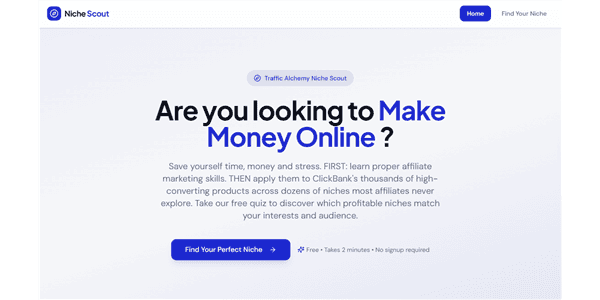


The time element stands out for me Joy because I learned firsthand that it takes quite a long time to prosper through blogging.
The amount of work required to put together an income generating blog seems immense. I was shocked by it frankly. But here’s the kicker; the work is not a sacrifice but an investment in freedom from time and location.
If you work intelligently you will drive passive income while you sleep or do whatever you want offline. This is why the work becomes an investment in freedom.
Excellent points here. Your guide grounds bloggers in reality. Anyone can go full-time. But following a comprehensive system consistently is the way to do it.
I remember being totally shocked – and here I am still not earning a fortune, but heading in the right direction.
The blogging model still appeals to me far more than being on social media pretending to make conversations and be helpful, when everyone has the same intent.
Of course I want to be helpful, but not at the expense of my whole day!
good point
Thanks also for your tip about Facebook. It seems I had to “Go to Rank Math SEO → Titles & Meta → Social Meta, and enter Facebook’s public default App ID”!!
Wow – who knew? Gemini! Not me 🙂 Hope it’s fixed now.