
Table of Contents
Affiliate marketing is simple on paper. You recommend a product, a reader buys through your link, and you earn a commission.
The hard part is getting the right people to trust that recommendation. Many beginners think a website alone will do the job, especially if they know how to build one. Then they learn what most online business owners learn: publishing a site is only the start. A blog gives you content, search traffic, trust, and a place to guide readers before and after they buy.
Today’s ClickBank Profit Club workshop was a strategy session about blogging.
Key Takeaways
- A blog helps affiliate marketing because it brings in readers through search, not only through social posts or paid ads.
- Helpful posts build trust, which makes readers more willing to click your affiliate links.
- Reviews, tutorials, and comparison posts work best when they match search intent and solve a real problem.
- One blog can support the full buying journey, from first-time visitors to readers who are ready to purchase.
- Simple SEO, smart link placement, and an email list turn blog traffic into longer-term affiliate income.
Why a blog gives affiliate marketing a stronger foundation
A blog is more than a page where you drop links. It’s the part of your business that keeps working after you hit publish. Good posts answer questions, attract search traffic, and help readers see you as a useful source, not a random promoter.
In today’s workshop, John took a survey of ‘Who has a blog online’ and the results were about 70% who do, vs 30% who don’t. Is this a chicken-and-egg situation where the people on the call are more active than those who don’t show up for the lives? I don’t know!
Anyway, the point of John’s workshop was to encourage new members to start their own blog.
If people are unsure what to write about, when you’re starting out with the ClickBank Profit Club, you can share your progress, to encourage others to join you.
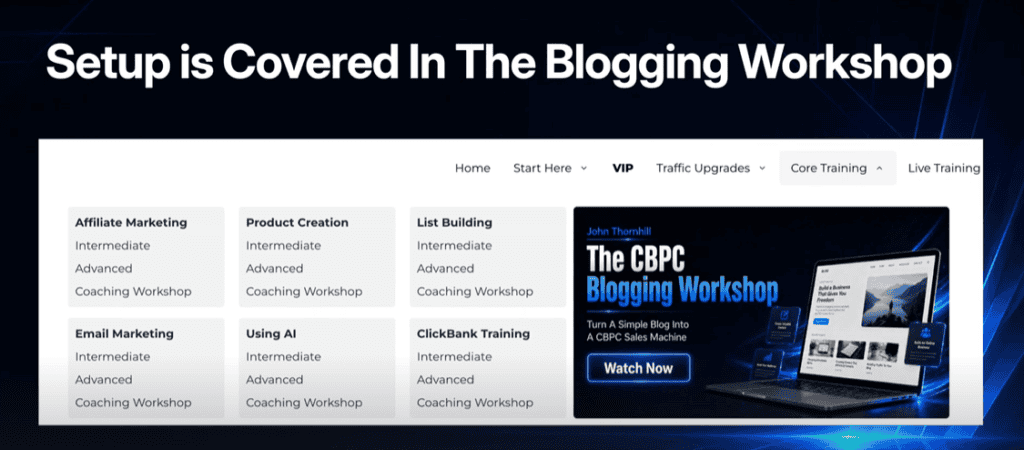
The topic of getting your blog set up is well covered inside the ClickBank Profit Club. (Affiliate link.)
Back to the ‘why create a blog’ topic.
A blog helps people find you through search
Search traffic is one of the biggest reasons blogging works so well for affiliate marketing. When someone types a clear problem into Google, or AI, they’re already looking for help. If your post gives a good answer, you can meet them at the right moment.
That traffic can last a long time. A strong post may bring visitors for months, sometimes years, while a social media post often fades within days. That’s a major difference.
For example, a post about the best email tool for beginners can keep pulling in readers who want to compare options. If you’re new to the model, this beginner guide to affiliate marketing shows why content is often the starting point.
A blog builds trust before you recommend anything
People rarely buy from a stranger after one quick glance. They buy when your content has already helped them, answered their doubts, and shown some honest judgment.
That means your blog can do the warming up before the offer appears. When you share useful tips, explain what worked for you, and point out real downsides, your recommendation feels earned. It doesn’t feel like a sales pitch.
Helpful content earns the click before the affiliate link does.
This matters even more in crowded niches. A reader may see ten bloggers recommend the same product. The one who explains it clearly, and with balance, often gets the click.
The kinds of blog content that work best for affiliate income
Some blog posts bring clicks but no sales. Others bring readers who are ready to act. The difference is usually fit. Your post needs to match what the reader wants right now.
Reviews that help readers decide
A good review doesn’t praise everything. It explains who the product is for, what it does well, where it falls short, and whether the price makes sense.
That balanced approach builds trust fast. It also filters out readers who aren’t a good fit, which saves them time and protects your reputation.
If you can share personal use, even better. People want details that sound lived-in, not copied from a sales page. You can see that approach in many affiliate blogging examples, where the useful content does more of the selling than hype does.
How-to posts that solve a real problem
Tutorial posts work well because they attract readers who need help now. A person searching “how to start an email list” is already trying to make progress. If your guide is clear, you become part of that progress.
This creates a natural place for affiliate links. You might explain how to set up a landing page, then recommend the tool you use for it. The product supports the solution. It doesn’t take over the article.
That difference matters. Readers don’t mind links when the link helps them finish the task.
Comparison posts that make choosing easier
Comparison posts meet readers with stronger buying intent. Someone searching “ConvertKit vs MailerLite” is closer to a decision than someone searching “what is email marketing.”
These posts work because they reduce friction. A reader wants a clear answer, plain language, and a reason to choose one option over another.
Keep the comparison focused. Cover price, ease of use, key features, and who each option suits best. Too many categories can turn a helpful post into a messy chart.
Perplexity.ai is a good, free, site to generate helpful comparison tables.
How a blog supports every step of the buying journey
A strong blog can guide people from first interest to final purchase. One post teaches. Another compares. A third helps them take action. Together, those posts create a path.
Early-stage readers need education, not a hard sell
Many visitors are not ready to buy on day one. They may be brand new to affiliate marketing, blogging, list building, or whatever problem your site helps solve.
At that stage, they need simple posts. Beginner guides, plain-English definitions, and articles that explain common mistakes work well. These posts build trust and keep people on your site longer.
They also give you a chance to link readers to deeper content. Someone who starts with “what is affiliate marketing” may later read your tool review or your comparison post. The first visit starts the relationship.
Later-stage readers want clear recommendations
When readers get closer to a purchase, they want less theory and more direction. They want to know what to buy, why it fits, and what trade-offs come with that choice.
This is where targeted posts shine. Reviews, comparison articles, and “best tools for…” roundups can turn interest into action when they stay honest and specific.
A blog can also help after the sale. Setup guides, usage tips, and follow-up tutorials support the buyer, reduce confusion, and make them more likely to trust your next recommendation.
How to make a blog more effective for affiliate marketing
Once the blog is live, the work shifts from setup to systems. That’s the part many beginners miss. Running an online business usually takes more than building pages and waiting for traffic. Most bloggers end up using several tools and platforms for writing, email, analytics, SEO, and link tracking. The blog is the center that connects them.
Choose topics that match what your audience already wants
Topic choice shapes everything. If your post solves a real problem and connects to a product people already want, you have a better shot at both traffic and clicks.
Start with search intent. What is the reader trying to do? Learn a term, fix a problem, compare options, or buy now? Match the post to that goal.
Community discussions about building your own affiliate blog often show the same pattern: people publish fast, then realize the topic didn’t match buyer intent.
Place affiliate links where they help the reader
Affiliate links should feel useful, not hidden or forced. Put them near the part of the article where the reader naturally wants the next step.
Clear wording helps. “Check pricing,” “See features,” or “Read full details” tells the reader what happens after the click. Vague anchor text gives them less reason to act.
Also, don’t crowd the page with links. Too many choices can lower clicks because the reader loses focus.
Use SEO basics so more people can find your posts
You don’t need advanced SEO to start. Strong basics go a long way.
Write clear titles that match what people search for. Use headings that answer specific questions. Add internal links so readers can move to related posts. Keep paragraphs short and make the page easy to scan.
Most of all, answer the search clearly. If someone lands on your post and finds the answer fast, both readers and search engines respond well.
Build an email list so your blog traffic does more
Many readers won’t buy on the first visit. That doesn’t mean the post failed. It means they need more time.
An email list lets you stay in touch after they leave your site. You can send new posts, useful tips, and relevant offers to people who already showed interest in your topic.
That turns one blog visit into more chances to build trust. Over time, email can lift the value of every post you publish.
An important decision when setting up your blog is where to host it. This is just one of the topics covered in the Blogging Workshop, but to be very clear:
Common Hosting Mistakes Affiliate Marketers Make (And How to Avoid Them)
Choosing the right hosting for your affiliate marketing blog can make or break your business. Unfortunately, many affiliate marketers stumble at this crucial first step, making costly mistakes that hurt their bottom line. Here are the most common hosting blunders to avoid.
Confusing WordPress.com with Self-Hosted WordPress
This is perhaps the most critical mistake new affiliate marketers make. WordPress.com is NOT the same as self-hosted WordPress.org. WordPress.com severely restricts affiliate marketing on their free and lower-tier plans, and you don’t have full control over your site. Self-hosted WordPress requires you to purchase separate hosting, but gives you complete freedom to run affiliate programs, install any plugins, and fully monetize your content. Always choose self-hosted WordPress with your own hosting provider for affiliate marketing.
Going for the Cheapest Option
While budget considerations are valid, choosing hosting solely based on price is a recipe for disaster. That $2.99/month shared hosting plan might seem attractive, but slow loading times and frequent downtime can devastate your affiliate conversions. Every second of delay can decrease conversions by up to 7%, meaning cheap hosting is actually costing you money.
Ignoring Scalability
Many affiliate marketers start small, but successful campaigns can explode overnight. Choosing hosting without room to grow means you’ll face a stressful migration during your busiest period. Look for providers offering easy upgrades from shared to VPS or dedicated hosting, ensuring your site can handle traffic spikes without crashing during that viral moment.
Overlooking Page Speed and SEO
Google prioritizes fast-loading sites in search rankings, and your affiliate income depends heavily on organic traffic. Shared hosting with hundreds of sites on one server often leads to sluggish performance. Poor hosting can tank your SEO efforts before they even begin. Invest in hosting with SSD storage, CDN integration, and optimized server configurations designed for WordPress or your chosen platform.
Neglecting Security Features
Affiliate sites are prime targets for hackers wanting to steal commissions by injecting their own affiliate links. Choosing hosting without SSL certificates, regular backups, malware scanning, and DDoS. Distributed Denial of Service is a cyberattack where a hacker floods a website with massive amounts of traffic from multiple sources simultaneously, overwhelming the server and making it unable to handle legitimate user requests) protection puts your income at serious risk. One successful hack can redirect months of commissions to someone else’s pocket.
I once had a blog that was hacked mercilessly because I had used cheap hosting. When I asked the hosting company to revert to a previous backup, they had ‘forgotten’ to do them so I lost the lot! WOW. I knew backups were essential, and checked that was a feature being offered, but I trusted that they would do it. If you’re in doubt about backups, install the plugin Backuply.
Underestimating Support Quality
When your site goes down at 2 AM, you need responsive support immediately. Many affiliate marketers learn this lesson the hard way after choosing hosting with slow ticket responses or no 24/7 availability. Look for providers with proven track records in customer support and multiple contact channels.
Even if you are a part-time blogger, speed of support is important. If you can only work weekends, hosting support that’s only Monday to Friday will delay your progress and leave you frustrated.
Choosing the Wrong Server Location
If your target audience is primarily in the United States but your server is in Europe, you’re adding unnecessary latency. Server location impacts loading speeds significantly, affecting both user experience and SEO performance.
The bottom line: Your hosting choice directly impacts your affiliate earnings. Don’t let poor hosting sabotage your hard work in content creation and promotion. Invest wisely in quality hosting that supports your business goals, and you’ll see the returns in better performance, higher rankings, and increased commissions.
Other Blogging Mistakes for Affiliate Marketers
Writing only for search engines instead of real people
Keywords matter, but the post still has to read well. If the content feels robotic, thin, or stuffed with repeated phrases, readers leave fast.
Write for the person behind the search. Keep the language clear. Use examples. Answer the question well. Search visibility improves when real readers stay and engage.
Promoting too many products without enough guidance
Too many offers create confusion. When every post pushes five tools, three courses, and two networks, readers stop knowing what you truly recommend.
A smaller set of well-chosen products usually works better. Clear guidance beats a long list. If your blog becomes known for careful recommendations, clicks tend to improve.
Conclusion
A blog helps affiliate marketing because it does far more than host links. It gives people a way to find you, learn from you, and trust your advice before they buy.
That trust grows through helpful posts, honest reviews, useful comparisons, and steady follow-up. Start with helpful content, stay consistent, and let the blog grow into an asset that keeps working long after each post goes live.
FAQ
Can you do affiliate marketing without a blog?
Yes, but a blog makes it easier to build search traffic and trust over time. Social platforms can help, yet blog posts usually last longer and give you more control.
How long does an affiliate blog take to make money?
It depends on your niche, content quality, and traffic. Many blogs take months, not weeks, because search traffic and trust need time to build.
Do you need a lot of tools to run an affiliate blog?
No, not at first. You can start with a hosted website, basic SEO tools, and an email platform. Add more tools later when the blog begins to grow.
My Recommendation to Speed up Blogging
If you find the thought of setting up a blog daunting, there are clear instructional videos within the ClickBank Profit Club or you can have the blog set up for you.
Worried what to write about? there are tools within the ClickBank Profit Club to help you choose what to write about.
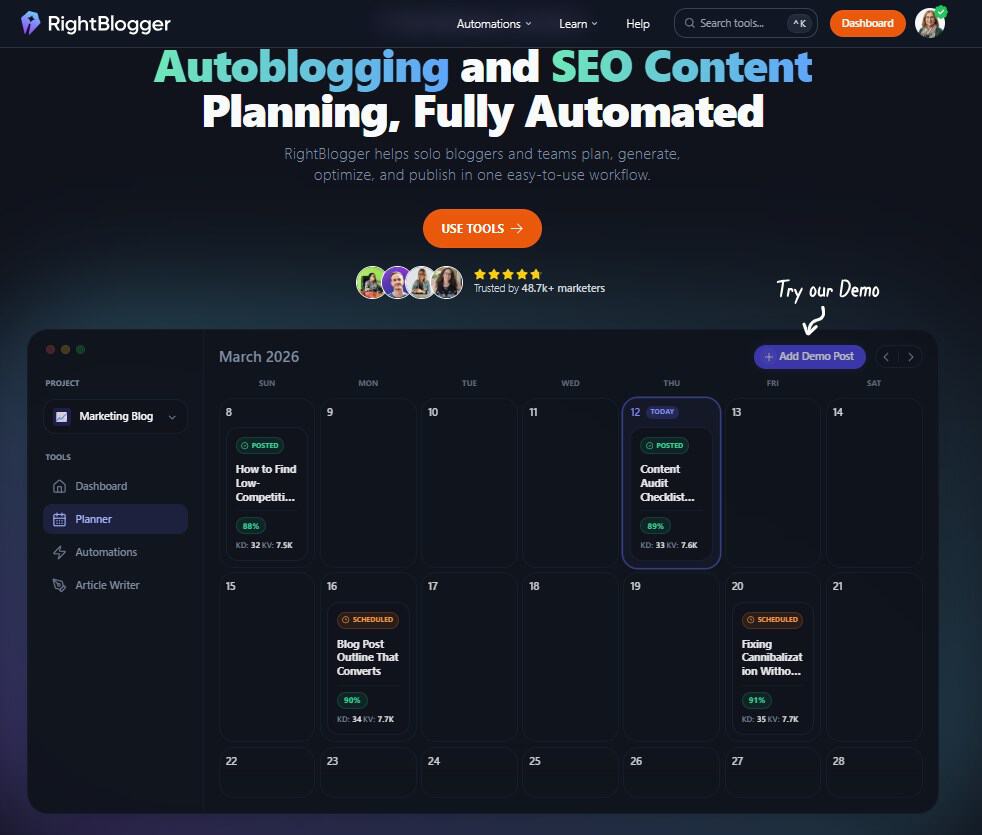
Alternatively I use an AI blog assistant to help me produce content, and monitor it. You can open an account and take a trial here RightBlogger (affiliate link)




What a helpful guide here Joy.
Smart note too on how most think the website alone sells affiliate offerings. Nope. Affiliate marketers need to offer something practical and free to earn trust. Trusting readers become customers. Happy customers drive referral affiliate sales.
My blog is particularly relevant to me at the moment, as I wasted a week trying to get back a Facebook page that was ‘taken away from me’ in one of their massive updates. I found out what had happened and got it bacl, but what a week of stress and misery!
Made me all the more aware of how much I need to work on my blog!