Table of Contents
Signage is one of those underutilised forms of marketing that’s far more effective than people give it credit for. You assume that signs exist to display your business name – but you can do so much more with them. To prove that’s the case, here are three ways to increase footfall with clever signage that will help your business grow.
Promotional Signage
You can use signs to promote different aspects of your business to a massive audience. Options include:
- A-Frame Signs
- Floor Stickers
- Window Posters
It’s worth getting more info on the different sign types, but all are useful when you want to promote something to all the people who walk around near your business. For example, maybe you’ve got a sale on and want to use this to increase footfall? A carefully placed and designed sign can scream about your promotion to the world, catching people’s attention and then drawing them in.
Or, what if you wanted to promote a loyalty program? Use a sign to tell people that they’ll get 10% off all future purchases if they buy something today and sign-up for your loyalty scheme. Think of different ideas or promotions that could grab people’s attention, and then use a sign to publish the news to everyone.
Directional Signage
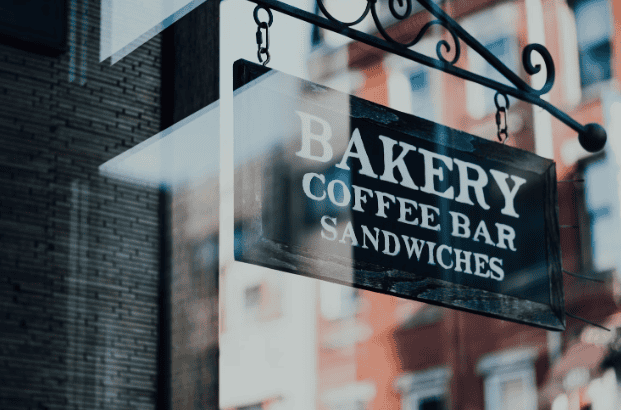
Sometimes, signs are great for directing people right to your business. A sign that hangs from the side of your building is ideal for this; it’s easy for people to see, and it directs them right to your business so they can look at what you offer.
On the other hand, you can implement a signage strategy in your local area by placing signs in certain places. Tie them around bollards or fences, then use arrows or draw a map on the sign to show where your business is. You draw people’s attention with a statement, for example, “2 for 1 on main meals”, then the sign pinpoints your location so people know where to find you.
Informational Signage
The final way for signage to increase footfall is a simple one: provide people with much-needed information. Use your signs to tell people about your business and convince them that they should pop inside. Look, you don’t need to write a promotional blog here; it should be a short and sweet sign that gets a clear point across.
The best example is a restaurant or cafe with menus printed on signs outside the establishment. Or a pub that has a sign saying “Guinness served here” or provides a list of the daily cocktail specials. It’s close to a promotional sign, but you’re more focused on giving people information rather than being overly promotional.
One of the biggest things to know about running a small business is that you should always take advantage of low-cost marketing. Signage is exactly that; other than the upfront costs for your signs, they don’t incur ongoing costs. Use them to promote special deals, direct people to your premises, or to give useful information. In any case, you’ll see just how powerful a good sign is at increasing footfall.
How does the Message of “Increasing Footfall with Clever Signage” Apply Online?
What many business owners don’t realise is that the principles behind increasing footfall with clever signage apply almost perfectly to the online world. In a physical location, footfall depends on two things: being seen, and being understood quickly. A shop can be in the right place, selling the right product, yet still be ignored if the signage fails to stop people, communicate relevance, or guide them inside.
Online businesses face the same challenge, except the “street” is a news feed, inbox, or search results page, and people are moving past at far greater speed.
In this context, online “footfall” is made up of impressions, clicks, and visits. Your website, offer, or content may be perfectly sound, but if the message that introduces it doesn’t catch attention or signal relevance, people simply scroll past.
The equivalent of a shop window sign online is the headline of a post, the first few seconds of a video, the subject line of an email, or even the short description on a profile. These elements do the same job as a physical sign: they decide whether someone stops or keeps walking.
Clever signage offline doesn’t try to explain everything. It focuses on one clear benefit, problem, or outcome that matters to the person passing by.
The same is true online. Effective headlines and hooks are not about being clever with words, but about being clear with intent. They speak directly to a specific situation the reader recognises, making it immediately obvious that what follows is relevant to them.
Finally, good signage always provides direction. A sign that catches attention but doesn’t clearly indicate what to do next is wasted. Online, this translates into simple calls to action: read more, watch this, click here, or download this.
A Practical Example?
To see this in practice, consider a local café that places a chalkboard outside saying: “Too busy to wait? Text your order to 555-123 and it’ll be ready when you walk in.” That is clever signage because it identifies a specific problem (being in a rush) and offers an immediate, low-friction solution.
In the online world, an affiliate marketer might use the exact same logic with a headline like: “Tired of posting every day with zero sales? Watch this 2-minute video to see the ‘Quiet’ system that works in the background.” Both “signs” work because they stop the right person, address a specific frustration, and point to a single, easy next step. Whether on a pavement or a smartphone, the psychology remains the same: clarity always beats clutter.