

Every few months, the marketing world finds something new to argue about. Last year it was “Is Instagram dead?” Before that, “Is blogging dead?” Before that, “Is email dead?” (You know what’s never dead? Marketers declaring things dead. If the industry had a mascot, it’d be a guy holding a tombstone.)
Now the debate du jour is this:
Should you grow your list with free lead magnets… or charge $5–$7 and only let buyers in the door?
And depending on which Facebook Group you lurk in, the “correct” answer is either:
“You’re stupid if you still use free lead magnets,”
or
“You’re stupid if you think someone will pay for a $7 offer in 2025.”
Let’s cut through the drama.
Why This Debate Even Exists
The truth is embarrassingly simple:
Ads are more expensive, people are more distracted, and audiences are smarter than ever.
That’s it. That’s the whole reason this conversation blew up.
Free gets you volume. Paid gets you commitment.
And marketers want BOTH — which is why everyone is fighting.
What we’re actually seeing is classic loss aversion (fear of wasted ad spend) colliding with commitment psychology (buyers behave differently than browsers). When you understand those two forces, the whole debate suddenly looks less like “genius marketers disagreeing” and more like “adults arguing over who gets the last cookie.”
So, let’s break it down without the hype.
Why Free Lead Magnets Still Work (Yes, Still)
Here’s an uncomfortable truth for the “free is dead” crowd:
Free still converts at insanely high rates.
Industry average for a lead magnet landing page? – 18% conversion.
Top-of-the-food-chain cheat sheets? – Up to 34%.
That’s not “dead.”
That’s “please feed me more traffic, preferably with sprinkles.”
But the flip side?
Once you have all those freebie hunters…
…less than 1% of them buy anything.
That’s the part nobody brags about on Facebook.
Nobody posts: “Just added 3,000 leads to my list… and only two bought something!” Because it doesn’t fit well on an inspirational Canva post.
- If you want volume, free wins.
- But if you want buyers, free can be a very slow burn.
Mini Case Study: The Freebie Funnel That Went Viral (But Converted Like a Wet Sponge)
A creator recently shared that she added 14,000 leads via a viral free checklist. Sounds amazing, right? Except only 0.8% ever purchased a single thing, even after a six-email nurturing sequence and a coupon. She called it “the most successful failure of my career.”
Free gets eyeballs.
Free does NOT guarantee wallets.
My own experience with free lead magnets
Last year I successfully promoted the Master Affiliate Profits Founders offer $797 offer.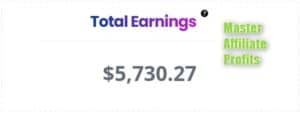
But as soon as everyone and their dog started promoting the free offer, my earnings dropped. However, I was bemoaning this fact to another marketer and I spotted him in the Facebook group celebrating the fact that he’d just made sales of some of the MAP courses – which are good.
I’m happy to include MAP as one of my free lead magnets. because it offers real value to members, free and paid.
But as with anything valuable, the courses only work if you apply them. Not already a member? See what you’re missing here.
Why $5–$7 Front-End Offers Are (Sometimes) Smart
Marketers finally discovered something psychologists have known forever:
The moment someone pays you — even $5 — they behave differently.
- A freebie seeker becomes a customer.
- A browser becomes a buyer.
- A stranger becomes a stakeholder.
That tiny transaction triggers the I-invested-in-this bias, which causes people to value, consume, and act on what they purchased. It’s basically the IKEA Effect: If you put effort (or money) into something, you assume it has to be good.
This is why the “$7 low-ticket funnel” exploded.
It’s a filter, not a moneymaker.
But here’s the twist:
- Low-ticket doesn’t beat free if your traffic is cold and your pitch is weak.
- And it doesn’t beat free if your upsells suck.
- And it doesn’t beat free if your niche expects free.
Example:
One marketer found:
- $7 micro-offer → 22% conversion
- Free lead magnet → 93% conversion, and 9% purchased the next offer
Volume. Matters.
Her conclusion wasn’t “free wins” or “paid wins.”
It was: “People will happily pay $0, but they’ll also buy a lot of things afterward if you warm them up correctly.”
Mini Case Study: The $7 Offer That Outsold the Creator’s Entire Course Catalog
A funnel strategist shared that her $7 “mini system” (a 9-page PDF + Loom video) attracted fewer people than her free lead magnets, but those buyers went on to purchase her $97 and $197 offers at 3X the rate of freebie leads.
Why? Because small payments create micro-commitments, which create bigger commitments.
This is textbook foot-in-the-door psychology at work.
So neither model is “better” and each one has a job.
My own experience with $7 offers
I promote a long-standing offer that started out as a free offer and then changed to beings a $7 Offer.
As you can see below, I earned well with that one too. You can’t draw any real conclusions from the numbers as I promoted them for different lengths of time.
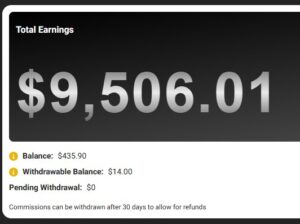
But my instinct is that it’s better to have members who have made that $7 commitment.
I’m happy to promote both because both are valuable, with different styles of training.
Make up your own mind – try both – and decide which suits you best.
- MAP > free offer
- $7 commitment.
The Real Question: What’s the Job of Your Funnel?
If the job is “build the biggest list humanly possible,” free wins.
If the job is “build a list of buyers,” low-ticket wins.
If the job is “pay for ads immediately,” low-ticket maybe wins.
If the job is “nurture and educate,” free wins.
If the job is “I want my audience to invest early,” low-ticket wins.
This is why vague advice like…
“Everyone should stop giving away free stuff!”
…is not helpful.
It’s like yelling “Everyone should buy Ferraris!”
Sure, sounds great, but context matters.
So here’s your simple compass:
Use Free Lead Magnets When:
- Your audience is cold
- You want list growth
- You don’t have strong backend offers
- You’re building relationships, not revenue
Use $5–$7 Low-Ticket Offers When:
- You want buyers
- You want to offset ad spend
- You have upsells
- Your market is solution-aware
Or, more simply: Is your funnel trying to make friends or make money?
My Take: Stop Choosing Sides & Build a Two-Track System
The smartest marketers right now aren’t picking “free vs paid.”
They’re doing this:
Free lead magnet → nurture → small offer → core offer
AND
Low-ticket micro-offer → upsell → core offer
- Both run simultaneously.
- Both feed each other.
- Both serve different psychological entry points.
Everyone else is fighting.
You’re building.
Think of it like having two doors into your business:
- Door A says “Come on in, it’s free!”
- Door B says “Come in if you’re serious.”
Why choose only one door when your audience is literally split between both behaviors?
What You Can Do Now
Choose ONE experiment to run next week:
- Launch a free cheat sheet and track cost-per-lead.
- Launch a $7 micro-offer and track cost-per-buyer.
- Compare the backend revenue of each funnel after 14 days.
Let data decide what works — not Facebook Group drama.
Here are my two offers. Try both and decide which suits you best.
- MAP > free offer
- $7 commitment.