Table of Contents

Email newsletters are one of those things people talk about like it’s this obvious small business move. Well, when it comes to marketing your small business, people always like to act as if it’s all a cakewalk, but the newsletter seems to get the reputation for being the most simplistic. “Build your list.” “Own your audience.” “Email converts.” And yeah, okay, sure, and then you start to wonder why nobody is reading your newsletter.
But then it’s Tuesday afternoon, the brain is fried, and it’s time to write an email that’s supposed to be helpful, on-brand, and not weirdly salesy. How are you supposed to even do that? Like, how are you supposed to compete with all these other newsletters, spam, well, junk in general that’s in people’s inboxes? Plus, nowadays, every newsletter sounds like it was written by a polite robot wearing a blazer; no one likes that!
So the real question isn’t “Should a small business send a newsletter?” It’s “How does a small business send a newsletter people actually read?” Not open, skim for two seconds, then delete. Oh, and good luck even getting someone to even open it.
You Need to Decide What the Newsletter is For
Now, this needs to be hammered on right now; a newsletter needs a job. No, not five jobs. One main job. Otherwise, it turns into a random grab bag of updates and links that feels like homework. Yeah, that sounds silly, but that’s the point. You need to take this seriously; this has to be a serious thing.
So pick the core purpose in one sentence. Is it meant to keep customers warm between purchases, like staying top of mind? Is it meant to drive sales, like a featured offer with a clear next step? Is it meant to build trust, like helpful tips and behind-the-scenes? Is it meant to build community, like customer stories and local shoutouts?
Now, with that part said, it can absolutely do more than one thing, but there should be a main theme. If the reader can’t tell what the newsletter is supposed to do, they stop caring. Well, it’s not exactly because they’re mean, but because people don’t have time for confusing emails.
This isn’t a Corporate Announcement
And this is usually where people start messing up, though, well, that and this is also where most newsletters lose people. They sound like they’re written to “an audience.” You know that LinkedIn voice? Well, that weird formal voice where everything is safe and polite and slightly empty. It’s the email version of beige, or LinkedIn speak if you want to call it that instead.
Honestly, it’s not a good idea to go that route, and instead, a small business newsletter works best when it sounds like a person wrote it. No, it’s not like it needs to be sloppy, but human. Like someone is talking to customers they actually know. So skip the “hope this email finds you well” stuff. Nobody believes it, usually people think it’s a scam or something. Start with something real.
You can use AI if you’re struggling with articulating something, as AI can even sound human nowadays, but you still need to have your thoughts out there. So, what do you want this to be? Like, a quick observation? A common customer question? A seasonal moment? Maybe a behind-the-scenes detail? A lot of people share wins and struggles to really get the human element out there, so others feel relatable, so that could be done too.
Yes, it Needs to be Skimmable
Are you guilty of this? How do you read the newsletters that you get? How do you read content in general? Well, most people open emails while doing something else. Like, they’re usually just standing in a queue, procrastinating, half-watching TV, eating lunch, pretending to work. So if the newsletter looks like a wall of text, it’s getting closed, even if the content is solid.
So, it means that you need to just break it up. It’s going to really help if it’s short paragraphs, bullet points, and one main point per section. Ideally, don’t do something like a Substack or a big diary entry; this isn’t meant for that at all. People want to get information and retain it, but you have to work with them too.
Give People a Reason to Stay Subscribed
Yes! Yes! Yes! Yeah, maybe this one sounds a bit harsh, but yes, it absolutely does deserve some attention, though. So, if every email is just “buy this,” people stop opening. People absolutely hate that because so many people are super guilty of this, too. Now, that doesn’t mean sales don’t belong in newsletters. They do. But a newsletter that only sells feels like a menu that never feeds anyone.
And yeah, for whatever reason, people do this all the time. They chose to subscribe for a reason, but if you sell to them all the time, well, you’re only giving them a reason to unsubscribe. Remember that. So, you’re far better off just to mix in value, be it useful tips, quick how-tos, simple reminders, stuff customers usually mess up, or even a quick guide that saves time. But even a helpful recommendation or a small “heads up” about something seasonal.
Seriously, stop selling. Sometimes it’s okay, but ideally, keep it a little rarer.
Just Use a Repeatable Format
It’s fine to shake things up here and there, but you should probably keep in mind, though, that newsletters get abandoned when they’re too hard to write. That’s not what you want. If every email has to be a masterpiece, it’s not going to happen consistently. So make it easy on purpose. 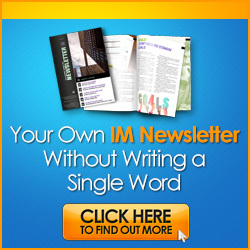
I wanted to create my own Internet Marketing monthly newsletter, but I knew it would never happen consistently. So I outsourced the job, for a remarkably low price. My subscribers love reading it, and it gets one of the highest open rates each month. Click here to see IM newsletters YOU could create (affiliate link) to keep your subscribers coming back for more. I can also use extracts for quick social media posts, or informative broadcasts if I’m short of time.
It helps to pick something repeatable, like a lot of people will do a quick opener, one useful tip, one featured offer, and one clear next step. You usually see a mini story (like what happened to you recently, for example), or you give a mini lesson with a call to action (but don’t sell people stuff often), or something like that. But try to keep to something structured that feels safe, but at the same time, doesn’t feel boring or anything like that.