Table of Contents
Have you ever wonder how we got from online diaries to automated blogging?
A Short History of Blogging
People started blogging for the same reason they start conversations, they had something to say and nowhere to put it. In the early days, a blog felt like a small porch light on a dark street. You wrote, someone wandered by, and a real connection formed.
That simple habit still matters for online business owners. A blog can attract search traffic, build an email list, and explain what you sell without you being “on” all day.
Still, keeping up gets tough fast. One blog is work. Two or three can feel like spinning plates, especially if you want every post to sound professional. That’s why the historry of blogging now includes a new chapter, automation, used carefully, with a human still in charge.
Key takeaways you can use right away
- Blogging began as personal publishing, then grew into communities built through comments, links, and shared interests.
- Easy tools changed everything, because non-tech writers could post without hand-coding pages.
- Search engines pushed structure and usefulness, so clear headings and reader-first answers became the standard.
- Business blogging added pressure, because income often depends on consistent, high-quality publishing.
- Automation can save time on repetitive tasks, like outlines, drafts, SEO checks, scheduling, and repurposing.
- Automation can’t protect your reputation, so you still need to fact-check, add real examples, and keep your voice.
- Trust is the real asset, protect it with accuracy, consistent tone, and clear disclosure when needed.
How blogging started, and why it spread so fast

Early web publishing often meant a personal homepage. People posted updates, favorite links, and opinions. Many “weblogs” started as link lists with short notes, like a public bookmark folder with personality.
Blogs spread because they gave everyday people something the old web didn’t, a simple way to own a corner of the internet. You didn’t need a publisher. You didn’t need a gatekeeper. You only needed curiosity and a little courage.
Community made the habit stick. Blogrolls (lists of other blogs you liked) helped readers hop from one site to the next. Comments added the missing ingredient: conversation. Over time, blogging became less like a flyer and more like a weekly meetup.
The first blog tools made publishing possible for non-tech people
At first, many writers edited HTML by hand. That limited who could publish and how often they posted. Then early blogging platforms and templates arrived, and suddenly “Publish” became a button, not a project.
Simple editors helped people write in plain text, add a photo, and hit post. That ease changed the mix of voices online. Hobbyists showed up. Parents wrote between errands. Small business owners shared lessons from the workday. The web got more human.
RSS also played a big role. Instead of checking ten sites every day, readers could subscribe and get new posts in one place. That made following blogs easy, and it rewarded bloggers who posted consistently.
The result was predictable: more blogs, more topics, and faster growth. When publishing becomes simple, experimentation follows.
I tried an early automated blogging tool when I first got started with WordPress – and it was DIRE! I was too inexperienced to realise how dreadful it was. But, being honest, I was relieved when those early blogs were hacked out of existence. (Poor security on my part – just another lesson along my blogging journey.)
Blogs became a community, not just a page
Comments turned readers into regulars, and I made some really good blogging friends. Some remain as blogging friends. Some fell by the wayside as bloggers, but we’re still friends on social media even though we’ve never met in person.
Trackbacks and pingbacks (automatic notifications between blogs) let writers respond to each other across different sites. Even before modern social media, bloggers found ways to say, “I saw your post, and here’s my take.”
Niches also exploded. One person wrote about baking sourdough. Another documented paying off debt. Someone else taught basic marketing. As niches formed, trust formed too, because readers could see patterns over time.
Consistency mattered, but not in the “post every day or fail” way. It mattered because people got to know you. A blog is a bit like a long-running radio show. The audience returns when the host sounds real and shows up often enough.
A blog earns loyalty the same way friendships do, by showing up, telling the truth, and staying consistent.
When blogs turned into a business channel

As blogging matured, many writers realized a simple truth: attention has value. If your posts helped people, traffic followed. If traffic followed, income options appeared.
That’s when blogs shifted from hobby corners to business assets. Online business owners started treating posts like long-term content, not quick updates. They built email lists to reach readers without relying on algorithms. They used affiliate links to recommend tools they liked. Ads and sponsored posts showed up as well, especially in high-traffic niches.
This is where the challenge changed. Writing for fun is one thing. Writing for income adds pressure. Quality and consistency stop being “nice to have” and become the whole job.
Search and social changed what “good blogging” looked like
Search engines pushed bloggers to answer real questions clearly. The best posts became easier to scan. Headings got sharper. Intros got faster. Readers wanted the point, not a warm-up lap.
Evergreen content became the backbone of business blogging. A solid “how to” post can bring in traffic for years, especially if you update it. Updating older posts also became a smart habit because it keeps information current and shows care.
Social media changed blogging too, but in a different way. Feeds rewarded fresh angles and clear hooks. Bloggers began writing posts that could be shared, quoted, or summarized into short snippets. In other words, the blog became both the home base and the source material.
For business owners, the goal stayed simple: helpful content that leads to traffic, leads, and sales.
The workload problem: more content, more channels, same 24 hours
Once your blog becomes part of your income, the to-do list grows fast. Research takes time. Writing takes time. Editing takes time. Images take time. Then comes publishing, promotion, internal updates, and answering comments or emails.
Now add multiple blogs to that mix. Many people enjoy running different sites for different audiences, but the calendar doesn’t care. You still need to show up and sound like you.
Professional quality is the hard part. It’s easy to post something. It’s harder to post something accurate, well-structured, and on-brand, week after week.
So business blogging created a new question: how do you keep publishing without burning out or lowering your standards?
To be honest, although I still enjoyed blogging, the workload was starting to defeat me.
Automated blogging today: what it is, what it isn’t, and how to use it well
Automated blogging means using tools to handle parts of the content process that don’t need your full attention every time. That can include idea lists, outlines, draft sections, SEO checks, scheduling, and repurposing.
Automation isn’t a “set it and forget it” promise. It’s more like a microwave. It saves time, but you still choose the ingredients, and you still care about the meal.
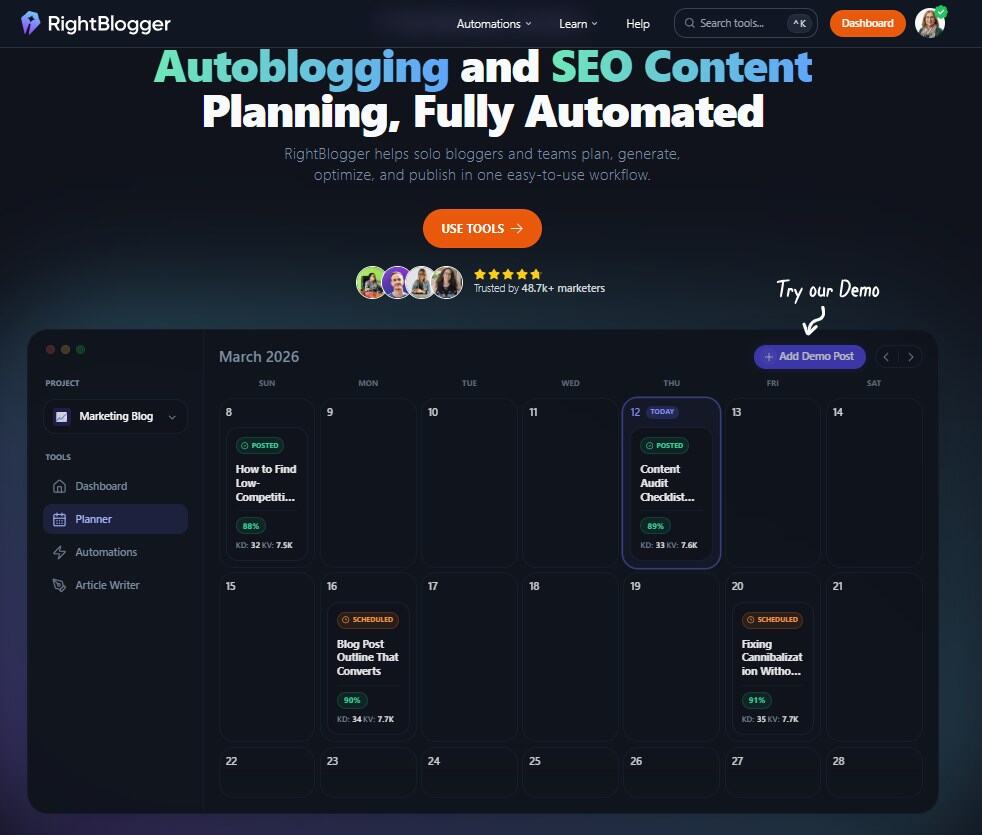
In 2026, many bloggers use automation to stay consistent, especially when running more than one site. Tools such as the RightBlogger autoblogging platform can help you plan, draft, optimize, and schedule posts so you don’t lose momentum. The best use case is simple: remove busywork while keeping your judgment and voice in the driver’s seat.
Where automation helps the most (and where it can hurt)
Used well, automation supports the parts of blogging that tend to slow people down. For example, it can speed up topic research, generate outline options, suggest headlines, and produce a rough first draft you can shape.
It also helps with ongoing maintenance. Some tools can suggest internal links, flag missing subtopics, or build a content refresh plan, so older posts don’t rot on the shelf. Repurposing is another win. A long post can become social captions, email snippets, or a short checklist.
However, the risks are real. Automated drafts can include wrong facts. They can sound bland. They can repeat ideas you’ve already published. If you publish too much too fast, your site can feel noisy instead of useful.
Here’s a simple safeguard checklist that keeps trust intact:
- Verify claims: Check dates, numbers, and “common knowledge” statements.
- Add real examples: Use your own experience, screenshots you created, or clear scenarios.
- Edit for voice: Read it out loud, then rewrite the stiff parts.
- Disclose when needed: Be clear about affiliate links and sponsored content.
Speed is helpful, but credibility pays the bills.
A simple workflow for responsible automated blogging in 2026
Automation works best when you treat it like an assistant, not a ghostwriter. A clear workflow keeps you moving and protects quality, even if you manage several blogs at once.
- Pick one topic and one goal (traffic, email sign-ups, or a product page click).
- Gather a few sources you trust, plus your own notes and experience.
- Generate an outline, then adjust it to match what your readers ask.
- Draft section by section, using automation for the first pass if you want.
- Human-edit the full post for clarity, tone, and structure.
- Fact-check and add proof (links, examples, or personal results where appropriate).
- Add disclosures for affiliate links or sponsorships, then publish.
- Schedule a refresh date, because good posts deserve updates.
This approach keeps you consistent without turning your blog into a content factory. You still own the message. The tool just helps you show up more often.

FAQs about the history of blogging and automated blogging
When did blogging begin?
Blogging traces back to the early web, when people posted personal updates and link lists on simple sites. It grew quickly once easy publishing tools arrived.
What made blogs different from regular websites?
A blog is built around ongoing posts, usually shown in date order. Traditional websites often stay mostly static, with fewer updates and less “conversation.”
How does blogging make money for online business owners?
Common methods include affiliate links, ads, digital products, services, sponsorships, and email list marketing. Most income comes from trust built over time.
Do AI-written blog posts rank in search?
Search can rank any page that helps readers. But weak, generic posts tend to fail. Human editing, accuracy, and usefulness matter more than how a draft started.
How do I avoid plagiarism when using automation?
Don’t publish raw output. Rewrite in your own voice, add original examples, and check that your structure and phrasing aren’t too close to any single source.
How often should I post on my blog?
Pick a pace you can sustain. One strong post a week can beat daily low-effort posts. Consistency beats bursts of activity followed by silence.
Conclusion
Blogging moved from personal online journals to platform-driven communities, then into a serious business channel. Now it’s entering an era where automation can handle repeat tasks and help you keep publishing.
The best approach is simple: save time where you can, but protect your voice, your accuracy, and your reader’s trust. This week, choose one old post to update, and choose one step to automate, like outlines or scheduling. Your future self will thank you.
RightBlogger (affiliate link) has helped me. See if it can help you with a demo, below.