Welcome to Part 2 in our series of YouTube Business Models
In Part 1, you saw behind the curtain: you did the “reckless” math on $250,000, learned why big view counts lie, saw how the real money happens off-screen, and watched everyday people quietly stack income with seven very real models. You also met your first two machines: using YouTube to sell your own offers and to get paid as an affiliate—without needing fame, charisma, or a million views. You can read Part 1 here.
Part 2 is where those ideas stop being “interesting” and start becoming unfair advantages.
Here, you’ll learn how to use YouTube to become the obvious expert in your niche (even with a tiny channel), pull viewers off-platform into assets you own, grow a brand that’s worth more than your subscriber count, and turn random traffic into guided paths that lead somewhere profitable on purpose.
If Part 1 proved YouTube can be a real business, Part 2 is where you start building the kind of business people trust, follow, and quietly pay—over and over again.
Method 3: YouTube as an Authority Builder
Becoming the obvious choice in your niche
This is the method for people who don’t want clicks. They want clients.
You’re not trying to be famous. You’re trying to be trusted.
Authority isn’t loud. It’s calm. When people see you as “the person who knows,” you stop chasing work. Work starts finding you—often in quiet emails that begin with, “I’ve been watching your videos…”
Why authority beats popularity
Popularity gets attention. Authority gets paid.
Popular creators entertain. Authority builders solve. Popular creators chase trends. Authority builders build reputation.
When someone trusts you, price becomes less important than certainty. They’re not shopping. They’re choosing.
Turning viewers into clients
Clients don’t come from hype. They come from clarity.
Hype makes noise. Clarity makes people feel seen.
When your videos show that you understand a problem deeply—the frustration, the confusion, the little details most people ignore—people start thinking, “They get me.”
And once someone thinks you get them, they start wondering if you can help them.
They don’t ask because you asked them to. They ask because the idea has already formed in their head.
Your job isn’t to convince.
It’s to resonate.
Resonance feels like recognition. It feels like, “That’s exactly what I’m dealing with.”
When people feel that, they don’t look for proof. They look for a way forward.
Resonance turns into inquiries.
Why services crush ads and affiliates
Ads and affiliate products need volume. Services need trust.
One client paying $3,000 can beat 300,000 views. One ongoing contract can replace a viral hit.
Services scale slower—but they pay faster. That’s why many quiet creators start with services first, then add everything else later.
Coaching, consulting, and invisible agencies
Authority doesn’t have to mean standing on a stage.
You can build authority as a coach who helps people change something specific, a consultant who fixes one kind of problem, or an agency that runs quietly in the background.
“Invisible” just means you don’t need to be flashy to be valuable. You don’t need to be loud to be needed.
Why YouTube builds trust faster than any website
Websites talk at people. Videos talk with people.
A website can explain. A video can connect.
On a page, people only see words. In a video, they see how you think. They hear how you explain things. They notice your tone, your pauses, your confidence—or your honesty when you don’t know something.
Your voice carries certainty.
Your face shows intention.
Your pauses show thought.
All of that builds trust faster than text ever could.
People don’t buy logic. They buy confidence. And confidence is easier to feel than to read.
Seeing you speak makes you real. It removes the mystery. You stop being “a brand” and start being a person. And people don’t trust logos—they trust humans.
That’s why someone can read ten articles and still hesitate, then watch one video and think, “Okay. I get this person.”
Video collapses distance. It makes strangers feel familiar. And familiar is what people buy from.
Why flaws make you believable
Perfect people feel fake. Honest people feel safe.
When you admit mistakes, struggles, or confusion, people think, “They’re like me.” And when someone feels like you’re like them, they listen.
Authority isn’t pretending to be perfect.
It’s being useful in public.
How small channels sell high-ticket
You don’t need millions of viewers. You need the right ones.
Big numbers impress strangers. Small numbers can change your life.
Ten people who trust you can become two clients, one big contract, or one life-changing deal. That’s how high-ticket works. It’s not about how many people watch—it’s about how deeply a few people believe.
Big audiences make you famous.
Small audiences can make you free.
Small channels feel personal. People feel seen. They feel noticed. They feel like they’re early.
When someone feels early, they pay attention. When they pay attention, they trust faster.
High-ticket offers don’t need crowds. They need confidence. And confidence grows in quiet spaces where people can actually hear you.
Method #3 YouTube as an Authority Builder in Action
Nina started with seven subscribers, and five of them were her friends.
She didn’t try to be big. She tried to be clear.
Her job was helping small businesses fix messy systems—files everywhere, passwords forgotten, tools not talking to each other. Nothing sexy. Just headaches.
So she made short videos with titles like, “Why Your Tools Don’t Talk to Each Other” and “The Messy Middle of Running a Small Business.”
No flashy edits. No big claims. Just calm explanations and small stories about what she kept seeing.
Her first month, most videos sat under 200 views. But something else happened.
People started emailing her.
Not fans. Not praise.
Questions.
“Can you look at my setup?”
“Can you tell me what I’m doing wrong?”
“Can you help me fix this?”
She didn’t sell. She listened.
She answered in new videos. She explained the patterns. She showed fixes.
Her channel didn’t grow fast. But her inbox did.
Six months in, she raised her prices. Not because she felt bold—because she was booked.
A year later, she wasn’t famous. Her channel still looked small.
But her calendar was full, her rates were high, and her income had crossed into six figures—built almost entirely from people who first met her through tiny YouTube videos.
In her niche, she wasn’t a creator.
She was a business.
Getting Started: Your First Authority Path
Pick one problem you can help with right now. Not ten. One.
Then make videos that explain why the problem happens, why most fixes don’t work, and what actually helps. Don’t teach everything—show enough to prove you understand.
At the end of each video, give people one simple next step: book a call, send an email, join a list, or fill out a form.
Not ten options.
One door.
Your first goal isn’t to look impressive. It’s to be clear.
Authority doesn’t come from polish.
It comes from usefulness—shown consistently.
Method 4: YouTube as a Lead Machine
Turning strangers into owned traffic
This is the method for people who don’t want to live at the mercy of an algorithm.
YouTube is powerful, but it’s borrowed power. You don’t own the platform, the rules, or tomorrow. One update can change what you see overnight.
What you can own is the relationship—and ownership changes everything.
Why platforms are rented, not owned
Your channel can disappear.
Your reach can shrink.
Your views can vanish.
Not because you failed—but because platforms change.
Algorithms shift. Rules update. Trends expire. When you build only on YouTube, you’re building on land you don’t own. When you build a list, you own the bridge to your audience.
You can borrow platforms but for long term success you’ve got to own relationships.
That mindset alone separates creators from business builders.
Why email still quietly prints money
Email is old. Email is boring. BUT Email works.
Emails don’t fight an algorithm. They go straight to a person who asked to hear from you. That permission is powerful.
Someone who chooses to hear from you is worth more than someone who accidentally scrolls past you. Email also lets you talk in a calm space—no autoplay videos, no screaming thumbnails, no competition for attention.
Social platforms bring attention and email keeps it.
Keeping attention is where money begins.
You can start building your own email list here, using this turnkey system.
How creators move viewers off YouTube
They don’t beg. They offer.
They give people a reason to leave: a checklist, a guide, a shortcut, a template, or a simple win. Something that feels like, “Oh, I actually want that.”
The video starts the story.
The next step continues it.
If your video solves part of a problem, the free download finishes it. The better the handoff, the more people follow.
Why repeat buyers beat new viewers
New viewers are exciting.
Repeat buyers are powerful.
Someone who has bought once is more likely to buy again. They already trust you. They already know you deliver.
A small group of repeat buyers can quietly out-earn a massive audience of strangers. You don’t need constant new traffic if the people you already have keep coming back.
Fame is fragile.
Loyalty pays rent.
How creators survive algorithm changes
They don’t panic. They redirect.
When views dip, their list still works. When reach drops, their backend still sells. When trends change, their people stay.
Platforms change.
Relationships don’t.
That’s why creators with strong backends sleep better at night.
Why backend beats frontend
Frontend is what people see.
Backend is where money lives.
Videos attract. Lists convert. Products compound.
If all you build is frontend, you’ll always be starting over. Backend lets you build once and sell many times, even when you’re not posting.
Quiet money lives in the backend.
Turning eyeballs into long-term income
Eyeballs are temporary but relationships are durable.
The goal isn’t to be watched.
It’s to be remembered.
Long-term income comes from people who come back, not people who just pass by. That’s the difference between traffic and an audience.
Method #4 YouTube as a Lead Machine in Action
Renee didn’t want views. She wanted emails.
She taught people how to organize digital chaos—files everywhere, inboxes overflowing, passwords forgotten, tools fighting each other.
So she built one simple thing first: a free “Clean Digital Desk” checklist.
Then she made videos that all pointed to it.
Not flashy. Not loud. Just useful.
“How to Stop Losing Files.”
“Why Your Inbox Is Lying to You.”
“The System I Use So I Don’t Forget Anything.”
Every video ended the same way: “If you want the checklist I use, it’s below.”
At first, it was slow. Five emails. Then twelve. Then thirty.
But once people were on her list, she talked to them differently. Short emails. Simple fixes. Real stories.
A week later, she offered a $49 workshop.
Twenty people bought.
Then she ran it again. More people bought.
She added a $299 program for people who wanted deeper help.
People joined.
She wasn’t viral. She was booked.
By the end of the year, her channel still looked small.
But her income didn’t.
She crossed six figures without ever chasing views—just by turning strangers into names, and names into clients.
Getting Started: Your First Lead Machine
Pick one simple thing you can give away that actually helps. A checklist, a cheat sheet, a template, or a short guide is perfect.
It doesn’t need to be fancy. It needs to be useful.
Create one video that solves part of a problem and invites people to get the full fix by grabbing your free thing. Make the handoff obvious and easy.
One problem.
One free solution.
One clear next step.
Talk about it naturally in your videos—not like a commercial, but like the next chapter in the story you just told.
Don’t wait until you “need” a list. Build it while you’re small. That’s when it’s easiest.
Big lists are built quietly—one helpful invitation at a time.
Method 5: YouTube as a Brand Builder
Building assets bigger than your channel
This method is for people who don’t just want income. They want leverage.
They’re not trying to build a channel. They’re building an asset—something that can be sold, partnered, licensed, borrowed against, or used as a launching pad for bigger things.
A channel is a hobby.
A brand is a business.
The real benefits of building a solid brand
A strong brand gives you options.
You can launch products and people will pay attention. You can raise prices and people will understand why. You can pivot into new ideas and your audience will follow.
Brands protect you from being replaceable. They make competitors irrelevant. They turn you from “one of many” into “the one they remember.”
A solid brand also gives you confidence. You stop guessing what to say and start speaking from something real.
And real always converts better than clever.
Why some channels are built to be sold
Some creators don’t plan to run their channel forever. They build it like a house they intend to flip.
They choose clean niches, simple formats, repeatable content, and clear audiences. Not because it’s boring—but because it’s transferable.
A channel about “daily weird facts” is hard to sell.
A channel about “home organization for small apartments” is an asset.
The more specific and useful the audience, the more valuable the channel becomes to someone else.
Some people don’t build channels for views.
They build them for exit.
Using YouTube to grow non-YouTube businesses
YouTube doesn’t have to be the product. It can be the megaphone.
People use YouTube to grow coaching practices, service businesses, ecommerce stores, SaaS tools, local companies, and consulting firms.
The channel creates trust. The business collects money.
YouTube warms people up so your business doesn’t have to start cold. That’s power.
Renting your audience to brands
This is the polite version of “sponsorships.”
Brands don’t care how cool you are.
They care who listens to you.
If your audience is clear and specific, brands will pay to borrow it for a moment. You’re not selling ads—you’re selling access.
A small channel with the right audience can beat a huge channel with the wrong one.
Relevance beats reach.
Why boring channels build loyal buyers
Exciting channels get applause.
Boring channels get repeat customers.
“Cool stuff” gets views.
“Useful stuff” gets loyalty.
Channels that solve the same kind of problem over and over attract people who stay, not just people who visit.
Boring means reliable.
Reliable means trusted.
Trusted means paid.
Using YouTube as a credibility engine
People Google you before they buy.
When they find your videos, they don’t just see information—they see proof. Proof that you exist. Proof that you care. Proof that you know what you’re talking about.
Your channel becomes your résumé, your pitch deck, and your reputation—all at once.
You don’t have to say, “Trust me.”
Your videos already did.
Why personality beats polish
Perfect videos feel like commercials. They look great, but they also feel distant—like something trying to sell you instead of talk to you.
Human videos feel like conversations. They feel like someone sat down, looked you in the eye, and just talked.
People don’t connect to lighting, camera angles, or transitions. They connect to voices, faces, quirks, and energy. They remember how you made them feel, not how clean your background was.
Your pauses, your jokes that almost land, your little mistakes, your strange expressions, the way you explain things—that’s what makes you recognizable. That’s what makes someone think, “Oh, it’s them.”
Polish can impress.
Personality makes you familiar.
And familiar feels safe.
Safe gets watched again.
Watched again becomes trusted.
And trust is how brands are built.
Method #5 YouTube as a Brand Builder in Action
Caleb never planned to be a YouTuber. He already had a business.
He restored old furniture in a small workshop behind his house. No logo. No brand colors. Just sawdust, coffee, and quiet mornings.
One day he filmed himself fixing a chair leg and said, “This is what most people mess up.”
No intro. No outro. Just hands, wood, and calm explaining.
It got 312 views.
But something else happened.
People started saying, “I like how you explain things,” and “You make this feel less scary.”
So he kept filming. Not to teach everything—just to show how he thought.
He didn’t sell furniture in his videos. He showed judgment. Taste. Patience.
Six months in, a local shop asked him to make pieces for them. They didn’t ask about price first. They asked if he was “the guy from YouTube.”
A year later, he wasn’t just selling furniture. He was selling Caleb.
Workshops sold out. Tool companies paid him to use their gear. Clients stopped asking for quotes and started asking for availability.
He raised his prices. Then raised them again.
His channel never went huge.
But his calendar filled, his waitlist grew, and his work started paying like a premium brand—because that’s exactly what he had become.
Getting Started: Your Brand Begins Now
Pick one clear identity. Not ten. One.
Who are you helping? What do you help them with? What do you believe about that problem that most people don’t?
Then make videos that show that belief in action.
Don’t try to impress. Try to be understood.
Use the same tone, the same kind of stories, and the same type of problems so people start recognizing you without seeing your name.
Your brand doesn’t start when you’re famous.
It starts when you’re consistent.
Build something people can recognize, remember, and trust—one honest video at a time.
Method 6: YouTube as a Traffic Funnel
Turning views into unstoppable momentum
Before we go any further, let’s make sure “funnel” doesn’t sound like scary internet jargon.
A funnel is just a guided path.
It’s what happens when you stop hoping people magically figure out what to do next—and you tell them.
Instead of: “Watch my video… and good luck out there.”
You create: “Watch this, then go here, then do this.”
That’s a funnel.
It’s not manipulation – It’s clarity.
People don’t hate being guided. They hate being confused.
A funnel is simply you saying, “If this video helped you, here’s the next step that makes sense.”
Why funnels matter
Without a funnel, traffic is random.
People watch, people leave and you start over.
With a funnel, traffic becomes useful.
People watch.
They take the next step.
They stay connected.
They come back.
They buy.
Funnels turn attention into relationships.
Relationships turn into income.
Why funnels are so powerful
Funnels do three quiet but important things:
- They reduce decision fatigue.
People don’t want to choose from ten options. They want one clear next step. - They increase trust.
When each step feels logical, people feel safe following you. - They create momentum.
Each small step makes the next one easier.
No funnel means you are constantly rebuilding from zero.
A funnel means every video builds on the last.
That’s how small channels grow faster than big ones.
Why traffic without direction is useless
A video can get views and still do nothing.
No clicks. No signups. No sales. No future.
That’s not traffic—that’s tourism.
Tourists look around and leave. Visitors follow signs. If your video doesn’t tell people where to go next, you didn’t build traffic—you threw a party with no exit signs.
Movement is what matters. Views are just movement that forgot where it was going.
The difference between leaks and funnels
Leaks happen when you give too many links, too many options, or no clear next step at all.
Funnels happen when there’s one obvious direction, one clear reason to go, and one simple action to take.
Leaks waste traffic.
Funnels multiply it.
Every time someone leaves confused, that’s a leak. Every time someone moves exactly where you hoped, that’s a funnel working.
How creators design “paths,” not posts
They don’t think, “What should I post today?” They think, “Where should this send someone?”
Every video has a job. Some introduce. Some warm up. Some convert. Some follow up.
Random videos get random results. Planned paths create momentum.
When videos connect to each other on purpose, traffic starts flowing instead of dripping.
Sending viewers where money is made
Views don’t pay bills. Movement does.
Money usually lives on email lists, in checkout pages, on booking calendars, and inside communities. Your video’s job is not to finish the story—it’s to send people to the place where the story continues.
If people don’t leave your video, they can’t enter your business.
Why funnels beat random links
Random links say, “Pick something.” Funnels say, “Go here.”
People don’t want options—they want direction. The more choices you give, the fewer actions you get.
One video.
One purpose.
One next step.
That’s how funnels win.
How creators turn one video into 10 entry points
One topic can become a long video, a short clip, a post, a quote, a checklist, a lead magnet, an email, a page, a teaser, and a follow-up.
Same idea. Different doors.
Traffic doesn’t need more ideas. It needs better distribution.
Why clarity converts better than creativity
Creative is fun. Clear is profitable.
People don’t act when they’re impressed. They act when they understand.
“Click here to get the checklist that fixes this” beats clever wordplay every time.
Confusion kills funnels.
Clarity feeds them.
Turning traffic into predictable systems
Predictable systems look boring. They do the same thing in the same order again and again.
But boring systems beat exciting chaos.
When you know where traffic goes, what happens next, and how money shows up, you stop guessing.
Guessing is stressful.
Systems are calm.
Directing traffic without being the “brand”
Funnels don’t need fame.
They need flow.
Faceless videos are perfect for funnel roles like:
- Intro videos that explain a problem
- How-it-works videos
- Step-by-step breakdowns
- Explainers that lead to a next step
Great faceless funnel formats:
- Slides + voice
- Animations
- Screen demos
- Checklist walk-throughs
- Visual timelines
Why faceless works for funnels:
- Easy to update or replace
- Easy to systemize
- Easy to outsource later
- Easy to scale
Faceless funnels feel like tools, not performances. And tools get used.
You don’t need to be known.
You need to be useful.
Method #6 YouTube as a Traffic Funnel in Action
Tara didn’t care about being a creator. She cared about getting clients.
She was a nutrition coach, but not the Instagram kind. She helped busy parents stop eating like exhausted raccoons at midnight.
Her problem wasn’t skill. It was traffic.
So she didn’t ask, “What should I post?”
She asked, “Where should people go?”
She built one simple thing first: a short quiz called “Why You’re Always Tired at Night.”
Then she made YouTube videos that all pointed to it.
Not aggressively. Casually.
“By the way, if you want to know why this keeps happening to you, there’s a link under this video.”
Every video solved one tiny problem. Sugar crashes. Late-night snacking. Weekend overeating. Stress eating.
Each one ended the same way: go take the quiz.
At first, nothing happened.
Then one person took it.
Then five.
Then one booked a call.
She didn’t change her content. She changed her path.
Now when someone found her video, they didn’t just watch. They moved.
Watch → click → quiz → email → call.
Some people disappeared. Some stayed. Some booked.
She tracked what worked. She improved the quiz. She refined her calls. She raised her prices.
By the end of the year, her channel still looked small.
But her calendar was full, her rates were high, and her business had crossed into solid six-figure territory—built almost entirely on quiet YouTube traffic that never went viral.
Her channel wasn’t a stage.
It was a road that kept paying.
Getting Started: Your First Funnel
Pick one video you already have—or plan to make.
Decide its only job.
Is it supposed to get emails, sell something, book calls, or warm people up? Pick one.
Then remove every other distraction.
One link.
One instruction.
One destination.
Say it clearly. Repeat it calmly. Make it easy.
Funnels don’t start fancy. They start simple—and then they start working.
Nice Work, You’ve Powered All the Way Through Part 2!
Now that you’ve finished Part 2 of this YouTube series, you’ve quietly picked up four unfair advantages most creators never touch: You know how to use YouTube to become the obvious expert, pull people off-platform into assets you own, turn a “tiny” channel into a real brand, and send traffic straight to where the money actually lives instead of letting it wander off. But we’re only halfway through the playbook.
In Part 3, we’ll flip the table and turn your channel into a research and validation lab. You’ll see how smart creators let their audience write the offers, how they use comments and clicks as market data, how they design content that gets watched and bought from, and how the real math of $250,000 works so you’re not guessing—you’re engineering.
Then in Part 4, we’ll tackle the part nobody wants to talk about: the emotional reality of low views, slow growth, fear of looking stupid, and why most people quietly leave long before they “fail.” You’ll learn how builders think differently from posters, and how to keep going long enough for all these systems you’re building to actually pay off.
For now, just know this: Part 2 gave you the external machinery. Parts 3 and 4 give you the radar and the resilience so that machine can run—quietly, reliably, and profitably—for a very long time.
See you next month!
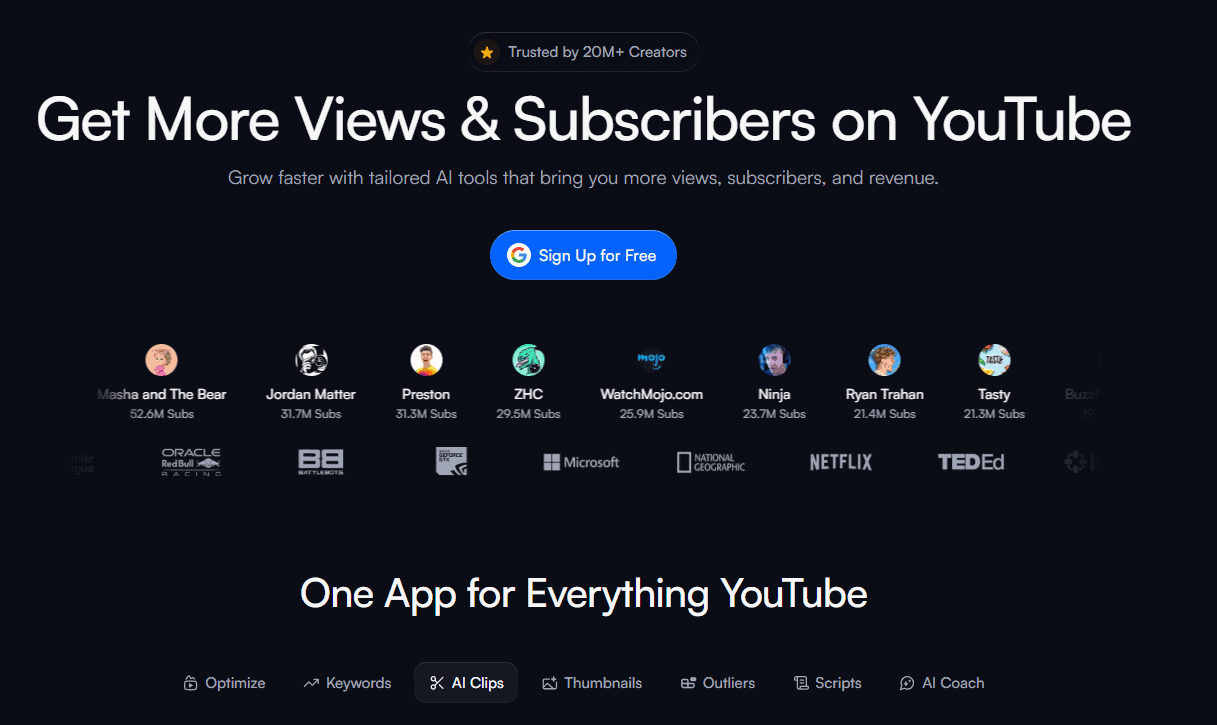
Essential YouTube Resource – Free Trial
Get more views and subscribers on YouTube with this software. Take a free trial of VidIQ here.